The U.S. Coast Guard is concluding a seasonal test of six uncrewed sensor boats on the Great Lakes. A Coast Guard navigation notice identified Lake Superior and waters near Isle Royale as operating areas.
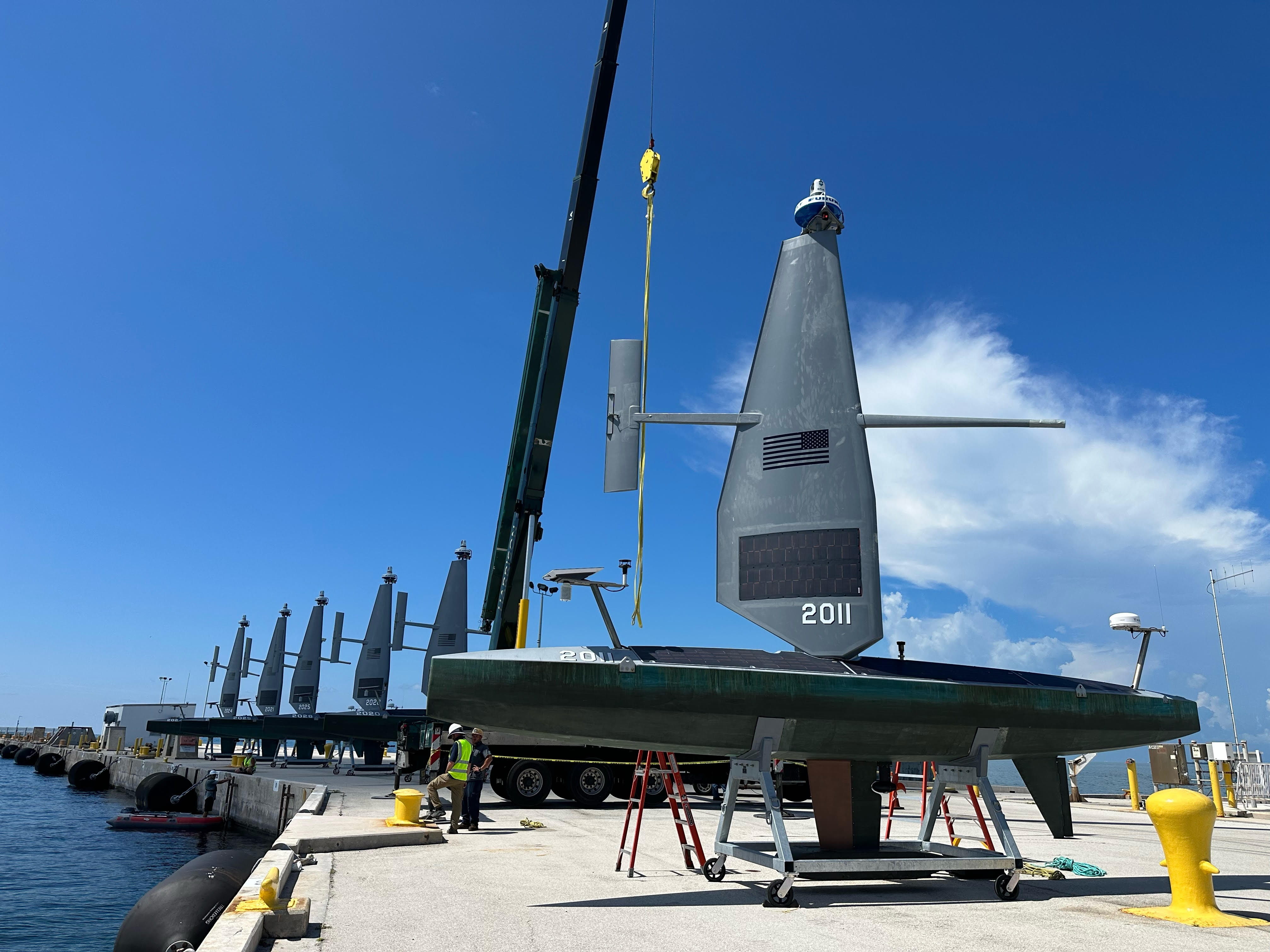
The Coast Guard announced Nov. 9 that its 2026 evaluation of six Saildrone Voyager Unmanned Surface Vehicles, or USVs, is concluding ahead of forecast winter icing conditions. The service plans another test period in spring 2027.
The 33-foot vessels sent real-time offshore weather data and operational information to Coast Guard command centers and boat stations across thousands of square miles of open water, according to the agency. They were deployed from April through November 2026.
“Our scheduled seasonal deployment of six Saildrone unmanned surface vehicles on the Great Lakes provided valuable insight into how autonomous platforms support Coast Guard missions in a freshwater environment,” said Rear Adm. Russell Dash, commander of the Coast Guard’s Great Lakes District.
What the drones do
Each Saildrone Voyager carries marine radar, an Automatic Identification System transceiver, meteorological instruments and an optical camera. Human operators remotely pilot every vessel around the clock from mission control centers spread across three time zones, according to the Coast Guard.
The agency described the vessels as tools that support personnel rather than replace them. Their measurements of wind, waves, water temperature and air pressure help crews assess conditions when planning rescues.
The Coast Guard said the vessels also help personnel recognize unusual vessel movements and monitor commercial fishing activity along the international border.
Privacy protections
The Coast Guard said the vessels’ cameras take still photographs at intervals rather than recording continuous video. According to the agency, the systems do not use facial recognition and are not designed to identify or follow recreational boats by their hull numbers.
The agency said its contract limits use of operational data to the Coast Guard and bars the vendor from selling that information or sharing it with other customers. The Coast Guard retains rights to the data after the contract ends.
The Great Lakes evaluation follows earlier Coast Guard testing in its Southeast, Southwest and Northeast districts.