Highland Copper has built wetlands, planted thousands of trees and replaced a bridge to improve fish passage near its proposed Copperwood mine in Gogebic County, even though construction on the underground copper mine has not started.
The environmental work is part of a broader mitigation effort tied to the development-stage project in Ironwood and Wakefield townships, near Porcupine Mountains Wilderness State Park. But the protections face scrutiny as state regulators weigh whether to renew a wastewater discharge permit that opponents say could threaten an endangered minnow, the redside dace.
What's been done
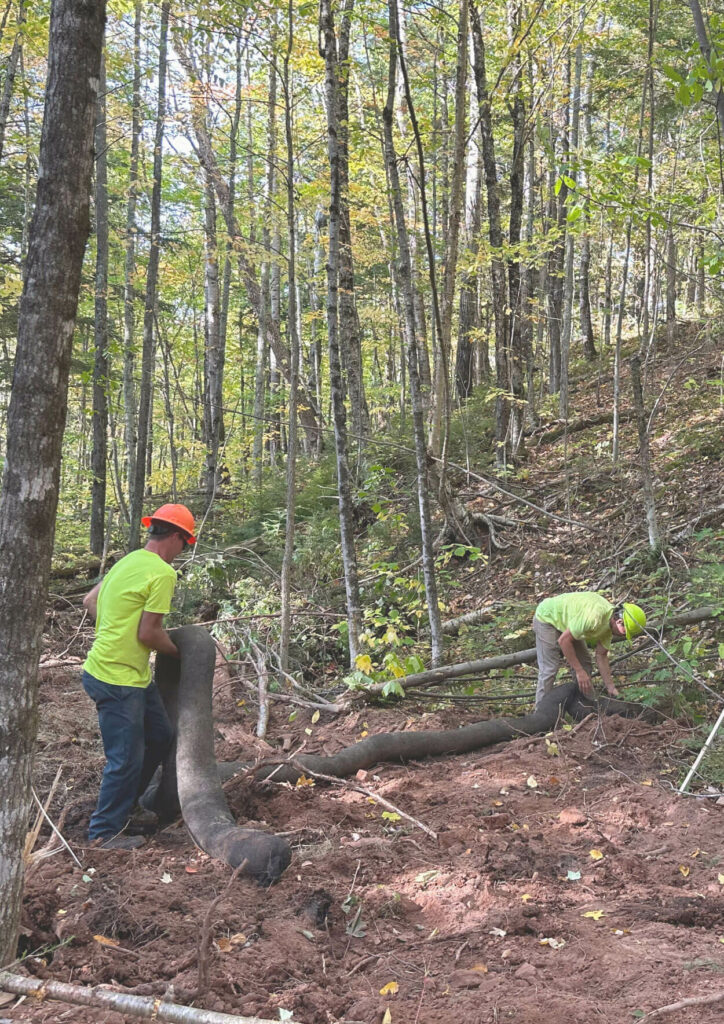
According to a Michigan Economic Development Corporation announcement in August, Highland Copper has constructed about 18 acres of new wetland and established conservation protections preserving nearly 700 acres of high-quality wetlands off-site. The company also restored stream systems and replaced the Choate Road bridge to improve aquatic habitat connectivity.
Highland Copper's project FAQ adds detail: the company planted more than 30 species of wetland sedges, grasses, rushes, wildflowers and trees as part of on-site wetland and stream habitat creation. Workers also planted more than 20,000 trees and 14,000 live stakes as part of a stream mitigation project and removed undersized culverts on Bluff Creek.
Upon completion of mining operations, the project is expected to leave behind more than 13,000 linear feet of restored stream habitat and more than 730 acres of wetlands protected through permanent conservation easements, according to the MEDC announcement.
Water treatment and monitoring plans
The mine's wastewater permit, first issued in 2012 by the Michigan Department of Environment, Great Lakes and Energy (EGLE), would allow Highland Copper to discharge up to about 504,000 gallons per day of treated wastewater and stormwater into the west branch of Namebinag Creek, a small Lake Superior tributary. No discharge has occurred, as MLive first reported in July.
Highland Copper says in its FAQ that the water treatment plant will remove industrial contaminants and condition the water to meet Whole Effluent Toxicity (WET) testing requirements, federally mandated under the U.S. Clean Water Act. Before discharge, treated water would be conditioned to restore hardness, alkalinity, pH stability and ionic balance comparable to the natural creek water.
The company says it will monitor the treated discharge and multiple surface water locations across the site for dozens of contaminants. Discharge Monitoring Reports would be posted publicly through the state's MiEnviro portal, and annual flora, fauna and aquatics monitoring reports would appear on EGLE's website, according to the FAQ.
Highland Copper also plans to install 15 new groundwater monitoring wells and establish data collection at 14 new surface water stations to strengthen baseline data before operations begin.
The redside dace dispute
The protections have not satisfied everyone. The redside dace, a brightly colored minnow that catches insects by leaping from the water, has been documented in the Namebinag Creek system near the proposed mine.
Highland Copper says the west branch receiving the discharge has no redside dace. The company says the fish are present on the main branch, about one mile downstream. But an EGLE permitting review identified redside dace records for both the west and main branches in 2009, according to MLive.
Copperwood Mine scientist Jay Roberts said treated water "will have ample opportunity to assimilate to the environment as it flows more than a mile downstream through the West Branch tributary to Namebinag Creek, limiting any potential influence on redside dace or other protected aquatic species."
Tom Grotewohl, executive director of Protect the Porkies, a mine opposition group, pushed back at a July 8 EGLE hearing. "Half a million gallons per day may not be a lot for the Mississippi River, but for this humble stream it would be significant," Grotewohl said.
Grotewohl's group wants the permit denied until a new fish survey is conducted, arguing that redside dace may have moved into new areas since the last study.
EGLE spokesperson Jeff Johnston said in an email, as reported by MLive, that aquatic surveys fall outside the scope of a wastewater discharge permit. The agency said the permit instead uses water quality limits, effluent toxicity testing and other requirements to protect aquatic life.
Highland Copper's mining permit separately requires an updated aquatics survey plan before mining operations can begin, according to the company's FAQ. A 2022 partial water quality survey found redside dace presence consistent with a 2010 baseline study.
The mine plan calls for underground mining with an anticipated life of about 14 years, according to EGLE's project page. EGLE's decision on the draft wastewater permit renewal remains pending.