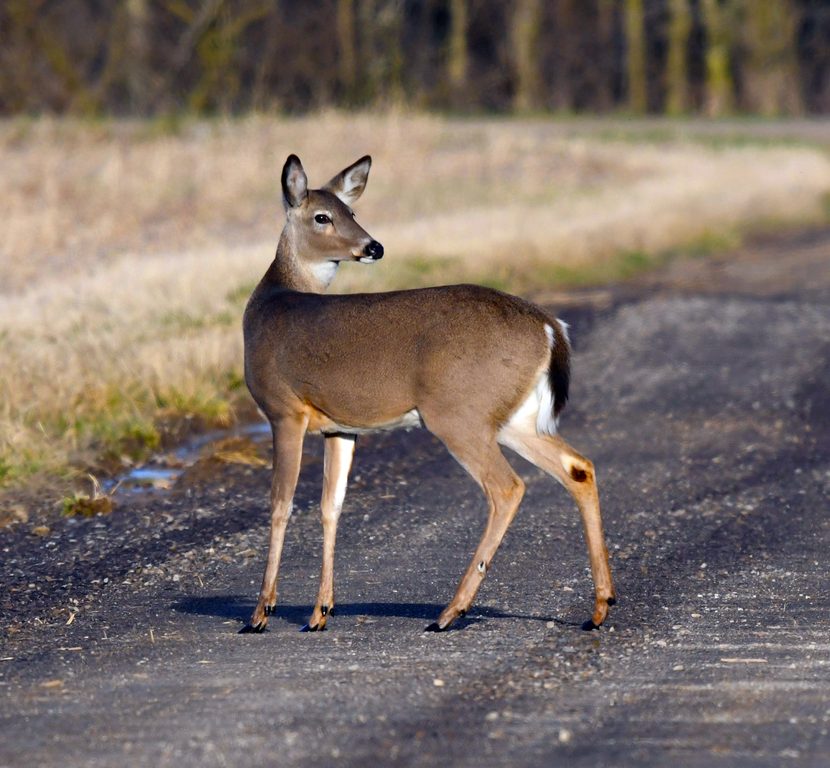
Michigan’s firearm deer season opens Sunday, Nov. 15, and the Michigan Department of Natural Resources (DNR) wants hunters across the Upper Peninsula ready.
The DNR released a list of 10 best practices on Nov. 4 aimed at helping hunters avoid the most common violations conservation officers encounter each year.
Several rules hit especially close to home for U.P. hunters.
Baiting is legal in the U.P., with limits
Deer baiting is banned in the Lower Peninsula except for limited exceptions during the Liberty and Independence hunts for hunters with qualifying disabilities, but allowed in the Upper Peninsula from Sept. 15 through Jan. 1, according to the DNR. Bait volume at any hunting site cannot exceed 2 gallons. It must be spread on the ground across a minimum 10-foot-by-10-foot area or its equivalent.
Mechanical spin-cast feeders are legal, as long as they do not distribute more than the 2-gallon maximum. On commercial forest land, bait must be removed each night unless the landowner grants permission.
The DNR urged hunters to use bait sparingly to help curb the spread of bovine tuberculosis and chronic wasting disease (CWD).
Hunter orange required Nov. 15-30
Between Nov. 15 and Nov. 30, all deer hunters, including those using archery equipment, must wear a hunter orange cap, hat, vest, jacket or raincoat, according to the DNR. The orange must be on the outermost layer and visible from all directions, even inside a blind.
Camouflage patterns are allowed if at least 50% of the garment is hunter orange. The DNR noted that hunter orange does not deter deer.
Licensing and tagging
Hunters must purchase a deer license before heading afield. Licenses and tags are available through the DNR Hunt Fish app, at DNR Customer Service Centers or at retail locations.
One key change: the DNR’s eLicense website will not sell deer licenses or tags through Nov. 30 to prevent mail delays during the season. Website sales resume Dec. 1.
Physical kill tags must be filled out and attached before field dressing or moving a deer. Hunters with digital tags must validate them in the Hunt Fish app immediately after harvest, before field dressing or moving the deer. Validation works without cellular service. Harvests must be reported within 72 hours or before possession is transferred, whichever happens first.
Digital-tag users generally must attach a durable tag bearing their license number in permanent ink if they leave the deer unattended. Exceptions include storage at their primary residence or a direct transfer to a processor or taxidermist. See the DNR’s tagging rules for details.
Tough winter may affect what hunters see
The DNR’s 2026 deer hunting preview noted the U.P. experienced a harsh winter for the second straight year. Deep snow and late-winter storms delayed spring melt and green-up. Local wildlife biologists reported that fawn recruitment may be lower than average compared with previous years, though population impacts are expected to be localized.
No major widespread die-offs were reported. A good summer with abundant acorns helped, but the DNR said the difficult winter may still result in below-average deer condition and antler development heading into the 2026 season.
New regulation: shorter muzzleloader season
The U.P. muzzleloader season has been cut from 10 days to three days, running Dec. 4-6, according to the DNR regulations summary. The shorter season is meant to reduce harvest and late-season pressure on deer migrating to wintering areas.
No antlerless deer hunting access permits are being offered in the U.P. for 2026, following several severe winters. Deer Management Units 351 and 352 have been rescinded.
Safety and the poaching hotline
Hunters may legally shoot from 30 minutes before local sunrise to 30 minutes after local sunset. Firearm hunting is prohibited in safety zones extending 450 feet from occupied buildings and farm buildings without written permission from the property owner or occupant. Shooting through those zones or at wildlife within them is also prohibited without that permission.
Hunter harassment is a misdemeanor in Michigan. Anyone who witnesses a violation or suspects hunting outside legal hours can call or text the DNR’s Report All Poaching hotline at 800-292-7800. Tips can be left anonymously, and monetary rewards may be offered for information leading to prosecution.
Tree stands and ground blinds on state-managed public land are available first-come, first-served. Public land cannot be posted or reserved. Stands and blinds left overnight must display the owner’s name and address, driver’s license number or DNR Sportcard number.
U.P. hunters interested in CWD testing can obtain free kits that include overnight shipping. Hunters must remove the lymph nodes themselves and send them to Michigan State University’s Veterinary Diagnostic Laboratory, which provides results directly to them.