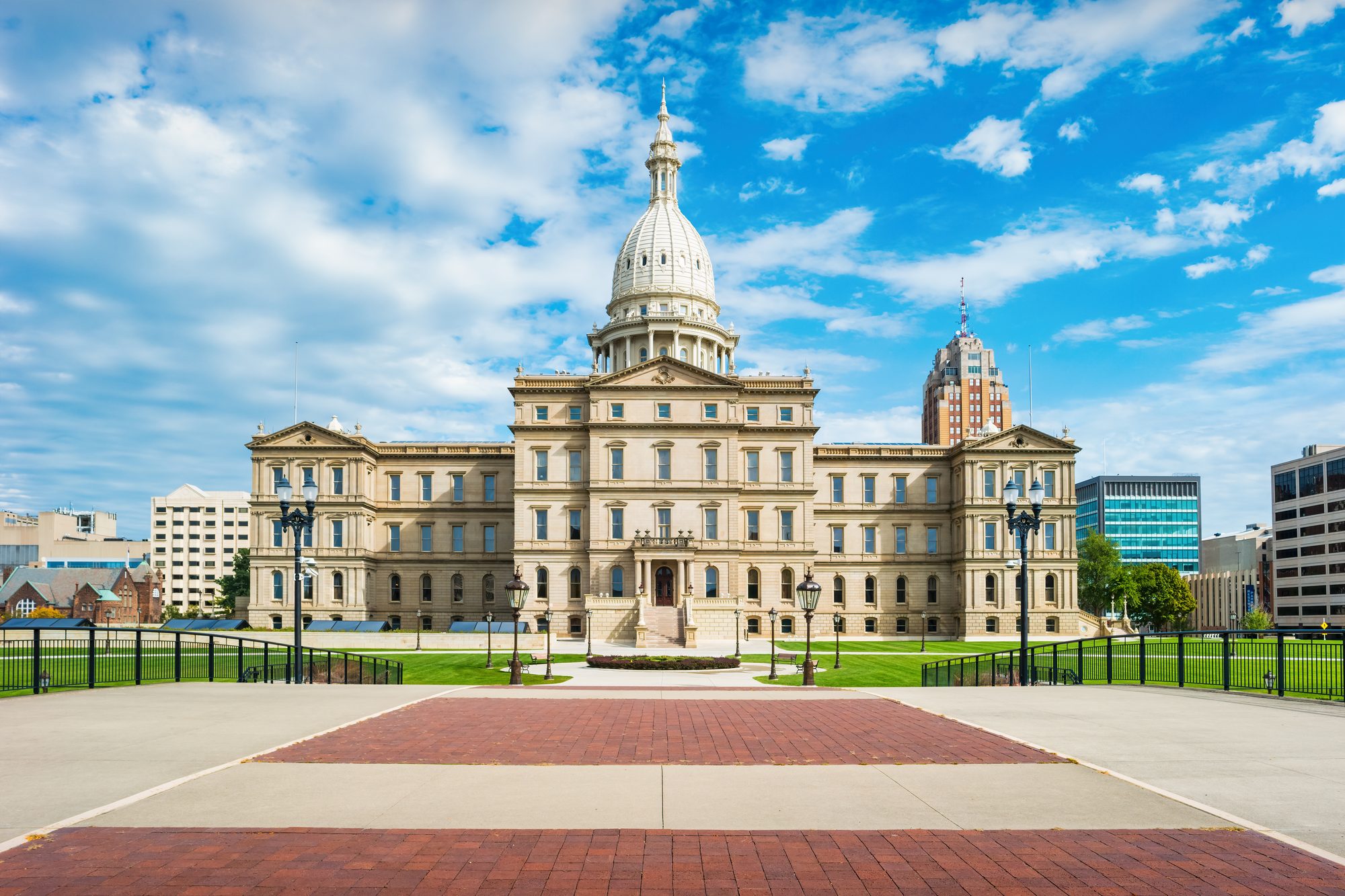
About 100 Indigenous activists and supporters rallied at the Michigan Capitol on Wednesday, Aug. 26, demanding government-to-government consultation on Enbridge Energy's Line 5 tunnel project beneath the Straits of Mackinac, WNMU reported.
The protest came the day after a runaway semi-truck struck an above-ground section of Line 5 in northern Wisconsin on Tuesday, Aug. 25, causing a leak of natural gas liquids and forcing evacuations of nearby homes. The pipeline remained shut down as of Aug. 26, though local officials said they had not detected hazardous levels of gases near the rupture.
The 73-year-old pipeline stretches from Superior, Wisconsin, to Sarnia, Ontario, including a 4-mile segment along the bottom of the Straits of Mackinac where Lakes Huron and Michigan meet. It carries up to 540,000 barrels of crude oil and natural gas liquids daily, according to the Chicago Tribune and JD Supra.
Nichole Keway Biber, a tribal citizen and activist with the Little Traverse Bay Bands of Odawa Indians, told the crowd that federal and state agencies must engage tribes directly rather than treating consultation as a formality.
"Don't treat it as just a little box to check, as an afterthought … Come to us, government to government," Keway Biber said.
When the U.S. Army Corps of Engineers approved the tunnel permit on Aug. 12, Keway Biber told WNMU the project would introduce "a whole new quantity of infrastructure that's completely unproven and never been attempted" in sacred lands.
Austin Lowes, chairman of the Sault Ste. Marie Tribe of Chippewa Indians, called the Army Corps permit decision "one of the most disgusting things I've been confronted with as a tribal leader," according to Interlochen Public Radio reporting on Aug. 20.
Four Michigan tribal nations challenged the state permit in court alongside environmental groups: the Bay Mills Indian Community, the Little Traverse Bay Bands of Odawa Indians, the Grand Traverse Band of Ottawa and Chippewa Indians, and the Nottawaseppi Huron Band of the Potawatomi.
Their challenge succeeded. On July 31, the Michigan Supreme Court ruled 6-1 that the Michigan Public Service Commission (MPSC) erred when it granted a key permit for the tunnel in December 2023. The majority found the commission's review was overly narrow, failed to consider whether the tunnel would harm public rights to the Great Lakes, and failed to study whether Line 5 would shut down if the tunnel is not built. The ruling sends the matter back to the MPSC with an order to "fully assess the Replacement Project's potential harms."
Yet the Army Corps approved its federal permit less than two weeks later, on Aug. 12. The Corps determined the tunnel is not contrary to the public interest and does not "impermissibly impair Treaty rights," according to Interlochen Public Radio. Tribal nations say the federal review was flawed and violated their treaty rights.
Separately, on July 30, the U.S. Court of Appeals for the Seventh Circuit upheld a ruling that Enbridge trespassed on the Bad River Band of Lake Superior Chippewa's reservation in Wisconsin, according to JD Supra. The court found that easements permitting Line 5 across tribal lands expired in 2013 and ordered the pipeline rerouted.
Enbridge spokesperson Ryan Duffy said in an emailed statement that the Army Corps approval and renewal of state permits by the Michigan Department of Environment, Great Lakes, and Energy represent meaningful progress for the project. Duffy said the approvals reflect years of regulatory review including environmental analysis and public input.
Antonio Cosme, an advocate with the Black to the Land Coalition who traveled from Detroit for the rally, estimated about 100 people attended.
No timeline has been set for the MPSC's reconsideration of the state tunnel permit. Gov. Gretchen Whitmer and state officials have sought to shut down the pipeline under the Straits since 2020, according to the Chicago Tribune.